Milo

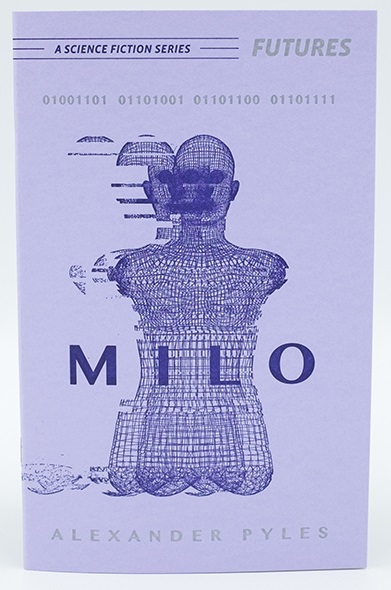
Milo Cover01001101 01101001 01101100 01101111 00100000 01101001 01110011 00100000 01100111 01101111 01101111 01100100 (Milo is Good). That’s my short review of fellow Seton Hill alumni Alexander Pyles’ excellent chapbook. It was published by Radix Media as part of their Science Fiction Futures Series. The company did a superb job of elevating the traditional chapbook into a more prestigious format. Aside from the stellar layout, the cover and interior art by Nico Roxe is stunningly original. So, what makes the story 01100111 01101111 01101111 01100100 (good)?

Spoilers Below

Well, I’ve already demonstrated one of my favorite elements. Pyles has his protagonist occasionally thinking in binary, which is rendered in the same manner I illustrated above. This is a uniquely cool idea, and it works perfectly in this tale. Milo, the namesake of the narrative, is a disabled man who decides to have his brain removed from his body and inserted into a robotic one. Things are great, at first.

There are two different elements at play in Milo that I really enjoyed. The first is the way the story reminded me of the horror inherent in the isolated brain trope, wherein a character has their brain removed from their body. My favorite example of this trope is in H.P. Lovecraft’s The Whisperer in Darkness, but Milo is not a horror tale. Pyles just renders Milo’s situation so well that readers will find themselves unnerved by the presentation of the character coming to grips with not having a body.

The second element is Milo’s slow loss of humanity in his robot form. At first, Milo only thinks in binary occasionally, but, by the end of the narrative, he only thinks in binary. This reminded me of moments in Paul Verhoeven’s classic, Robocop. Except, in this case, the robotic components consume the human, instead of the human transcending “literal” programming. The reader is left wondering what it means to be human, and I believe that is precisely the response the best science fiction should inspire in readers.

To conclude, Milo is an excellent story. It’s original, and it makes you think about fundamental questions we need to be discussing as a society. On top of that, you can pick up a copy without breaking your bank, and you’ll be getting a gorgeous piece of art to display on your bookshelf. You can also spring for a copy of the entire Science Fiction Futures collection from Radix Media and discover what the other entries in the series have to offer. I’m sure the quality is just as good as Milo. It’s a great time to be a reader when a chapbook can pack so much punch, but I’d certainly be interested in spending more time in Milo’s world if Pyles wanted to expand the tale further.
Read more of my work

View all my Goodreads reviews

Color Out of Space Review

Important Note: I’m linking this article to a blog post where Richard Stanley was accused of domestic abuse here. Obviously, this kind of behavior is horrific, and Stanley shouldn’t be working as a director. This note was added to this article on 03/24/21, but the rest of the article has been left untouched.

I got the chance to see Richard Stanley’s 2019 adaptation of The Colour Out of Space (Yes, Lovecraft intentionally spelled color that way for his story) on Wednesday (January 22nd). It was a ton of fun seeing the film with fellow Lovecraft fans, and afterward, my friends and I even did a little movie discussion at an H.P. Lovecraft inspired bar near us, J.B. Lovedrafts. We even saw a special version of the film that included a Q &A with some of the cast and the director.

Since more people seem to watch videos over reading reviews these days, I thought this was a good opportunity to try my hand at a YouTube review. The experience was fun, but I have a lot to learn about presenting a spoken review in front of a camera. I forgot to mention two cool observations, and I didn’t feel I was always as coherent as possible, but I think I still got most of my points across. I also forgot to ask for people who saw the film that hadn’t read the original story to let me know how they felt the film was because I am interested in a non-Lovecraft fan’s perspective.

SPOILER WARNING FOR EVERYTHING BELOW!

If you’re interested, here are the two points I didn’t touch on in the spoiler section that I wanted to. I really liked how the color seemed to affect the members of the family differently. Cage’s character is haunted by a horrible smell, and I loved that particularly because I thought it was probably a reference to the Dunwich Horror, where there’s a line that goes, “as a foulness, ye shall know them,” referring to identifying evil, ancient entities. Also, as my friend Tom pointed out, Lavenia’s character spends most of the film trying to leave the Gardner farm, and at the end of the movie, the color may have granted her wish and teleported her to another world.


The Fisherman

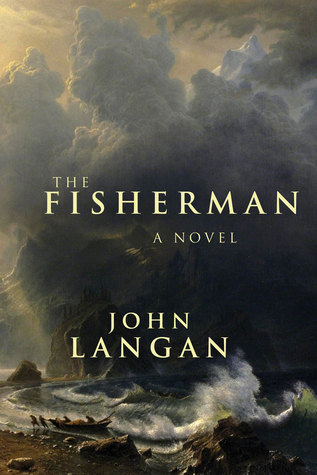
The FishermanYesterday, I finished my third book of the new year. I enjoyed John Langan’s short story collection, The Wide Carnivorous Sky and Other Monstrous Geographies, so much that I wasted almost no time reeling in his most recently published novel, The Fisherman. After consuming the work in under a week, I can safely say that it includes everything I enjoyed in his short fiction while adding new layers of horrifying goodness.

The narrative follows Abe, an extremely likable widower, as he recounts the haunting experiences and myths surrounding the mysterious Dutchman’s Creek. Here I must pause to deliver an amusing anecdote. While listening to The Fisherman via audible, en route to Philadelphia with my wife, I couldn’t help adding my own soundtrack of “Dun Dun DUN” to the story as Abe recounted the first time he heard about Dutchman’s Creek from his friend, Dan. Immediately after I finished my theme, the narration stated, “If this had been a movie, I guess this would’ve been the moment ominous music boomed on the soundtrack.” My wife and I had quite a laugh, but I think that perfectly illustrates how well Langan knows his own story.

While Abe is the primary protagonist, most of the story is relayed by a different character. He is a cook who bears a striking similarity to H.P. Lovecraft. Besides both people being named Howard, the cook is also described as having a lantern jaw, being a writer, and coming from Providence. Putting all those things together paints a very particular picture, and I loved it. Howard relays the spooky story about Dutchman’s Creek’s origin that he was told by a minister, who heard the story from one of his parishioners in a nursing home. Much like a real fishing story, this one comes via several degrees of separation from the teller. As for the origins of Dutchman’s Creek, you’ll have to read The Fisherman yourself to get all the horrifying details, but I can’t help telling you that the antagonist of the novel is a kind of supernatural Ahab set on capturing a sea creature that would put Moby-Dick to shame.

During the novel, there were at least two references to some of Langan’s short fiction that I loved. The first was a kind of magical right of passage that two characters must make to a city patrolled by bird-like figures who should be familiar to those who read Outside the House, Watching for the Crows in The Mammoth Book of Cthulhu. The second was when Abe passes by the headless statue of a pregnant woman, which readers of Mother of Stone, the closing tale in The Wide Carnivorous Sky and Other Monstrous Geographies should recognize. These connections deepened my reading experience and made me hoot with amusement when I came across them.

Alright, I better stop rambling about how much I liked this novel, or we’ll be here forever. In summary, The Fisherman is a great read. It has a protagonist you love (imagine if Pet Sematary was told from the perspective of the kindly neighbor instead of the doctor), a classic Weird narrative (with enough spooky fish to please a resident of Innsmouth), loads of intricately detailed references (to other horror works, Moby-Dick, and more), emotional resonance (anyone who’s ever lost someone will find themselves connecting with the novel’s portrayal of grief), and lastly, it will keep you turning pages toward its appropriately disconcerting ending. I can’t recommend this novel enough if, like me, you’re a horror reader who leans toward the Weird.

Read more of my work

View all my Goodreads reviews